

The new generation of direct printed aligners
Direct printing, thermoresponsive technology and production freedom brought together in a fully open system built for a new generation of digital orthodontics.
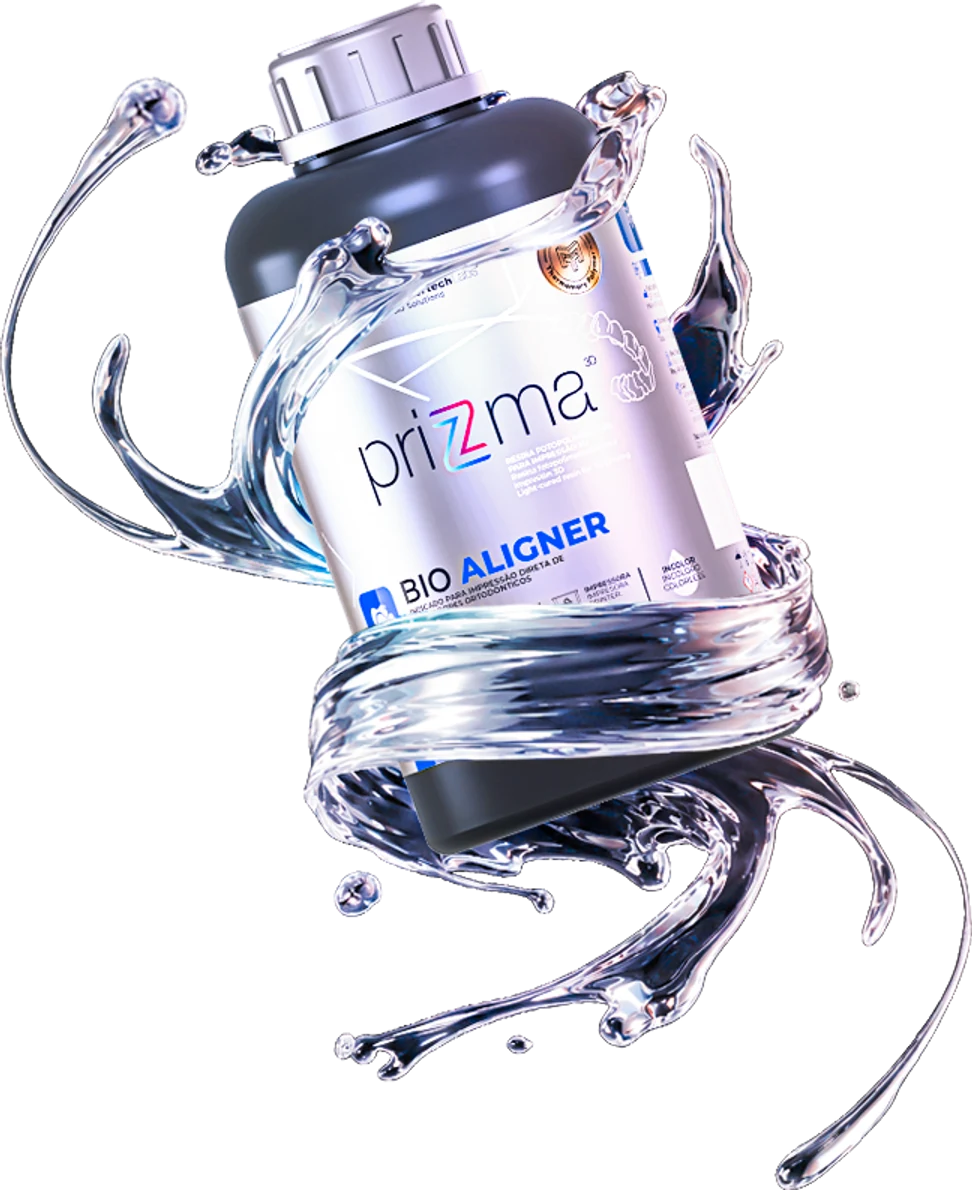
A new way to produce aligners
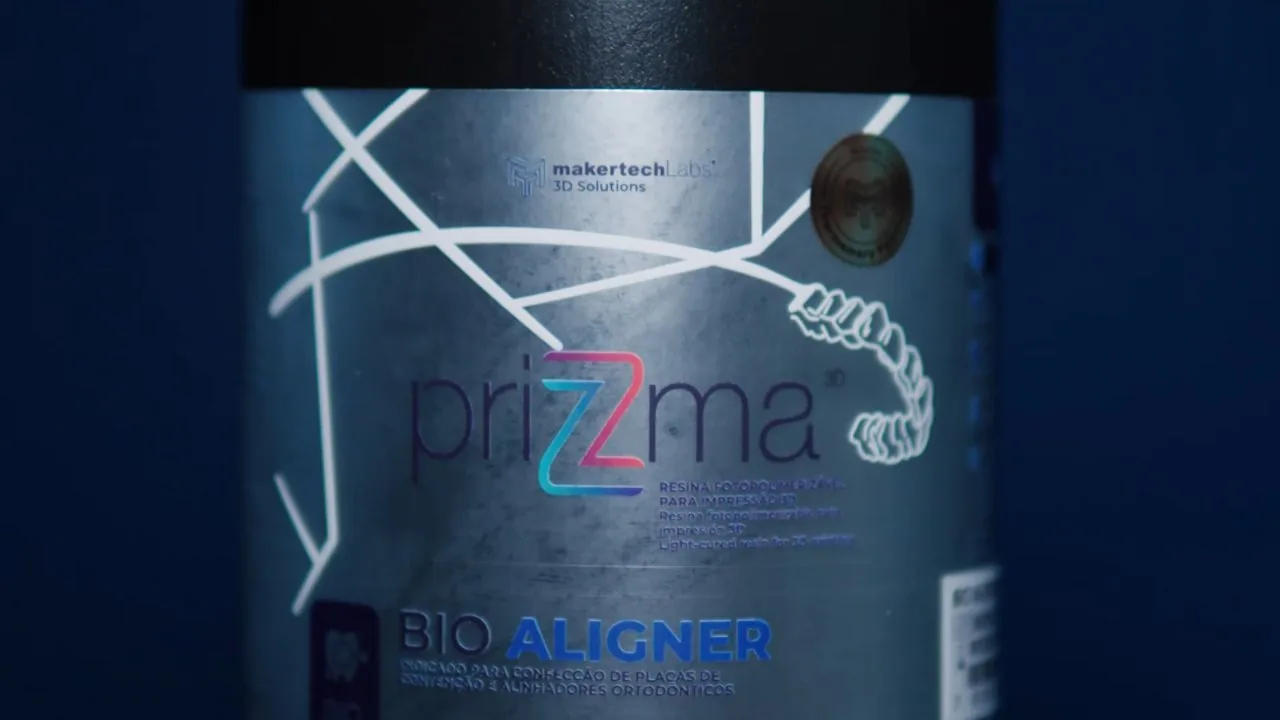
PriZma Bio Aligner turns the digital workflow into a more direct process: from planning to printing, with more autonomy over every production step.
With Thermemory Polymer® technology and an open system, the professional gains the freedom to integrate planning, production and clinical protocol inside their own workflow.
Fewer intermediaries. More control. More freedom to produce.
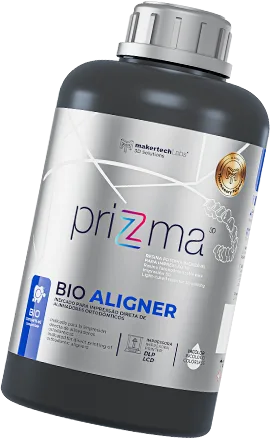
A protocol validated by people who know the subject.
A technology that combines the freedom of an open system with defined protocols for every step:
- Digital planning
- 3D printing
- Post-processing
- Clinical protocol
Why choose PriZma Bio Aligner?
Compare for yourself
| Features | Conventional aligners | PriZma Bio Aligner |
|---|---|---|
| Tracking (fit) | Limited and hard to maintain | Anytime, just reheat the aligner |
| Delivery time to patient | Over 30 days, when outsourced | In up to 7 days*, with same-day delivery possible. |
| Precision | Average | Superior |
| Tooth sensitivity | Higher sensitivity | Practically nonexistent* |
| Resin attachments | Usually required | Almost never needed* |
| Process management | Dependence | Complete freedom in clinical decision-making |
| Accuracy | Lower accuracy of orthodontic movement | Greater accuracy and clinical safety* |
| Geometric precision | Medium | Higher degree of precision |
| Sustainability | More waste generation | Much less waste in production |
Tracking (fit)
Delivery time to patient
Precision
Tooth sensitivity
Resin attachments
Process management
Accuracy
Geometric precision
Sustainability
* According to clinical planning.
How does the technology work?
Direct printing
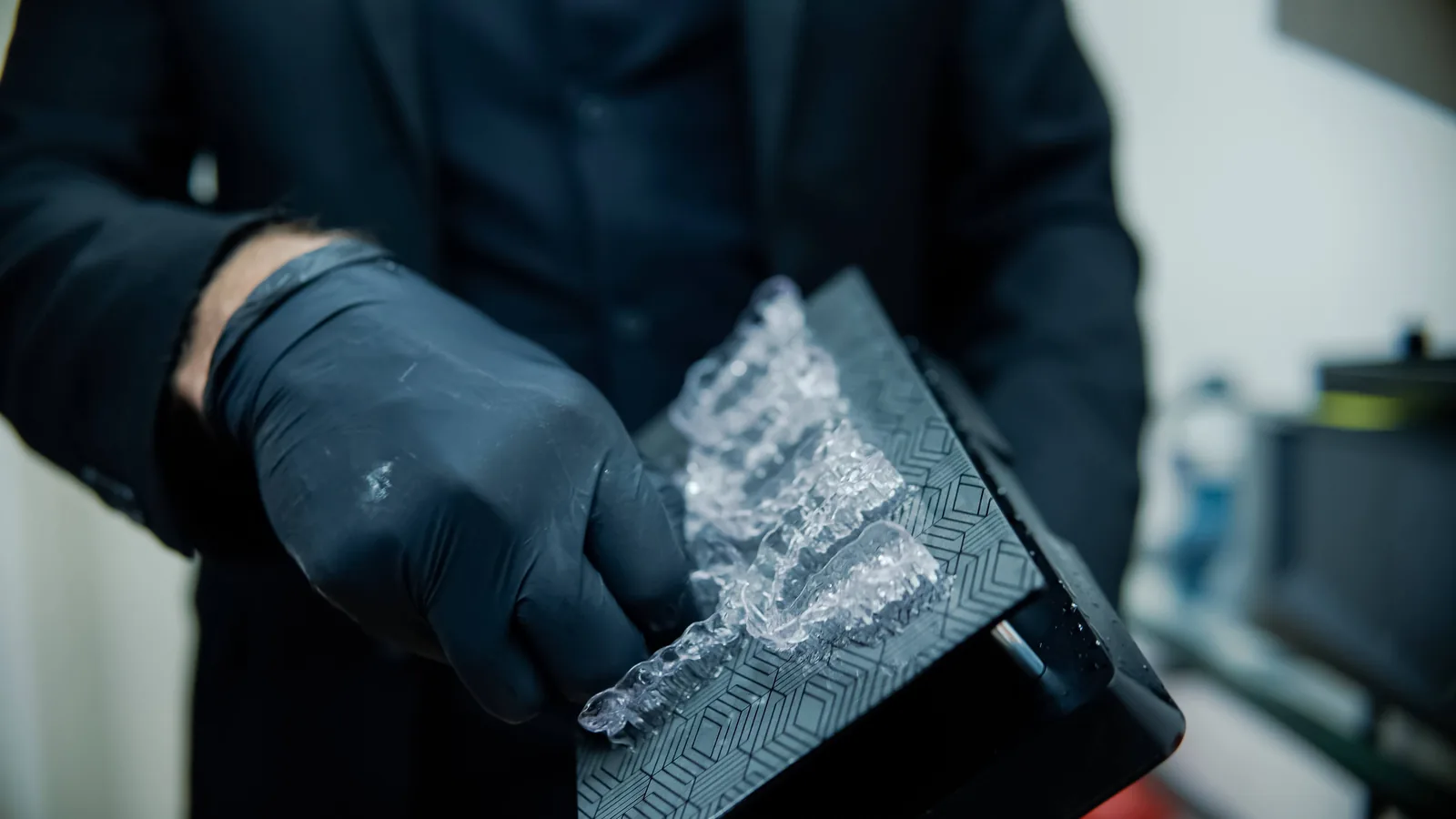
The aligner is produced directly by 3D printing from the digital plan, with no need to print models and thermoform sheets.
Intraoral adaptation
Once fitted, the aligner meets the intraoral temperature, starting the thermoresponsive response of the material.
Shape memory activation
Near body temperature, Thermemory Polymer® activates its shape memory behavior, favoring recovery of the aligner geometry that was planned.
From printing to activation: technology engineered to respond to temperature.
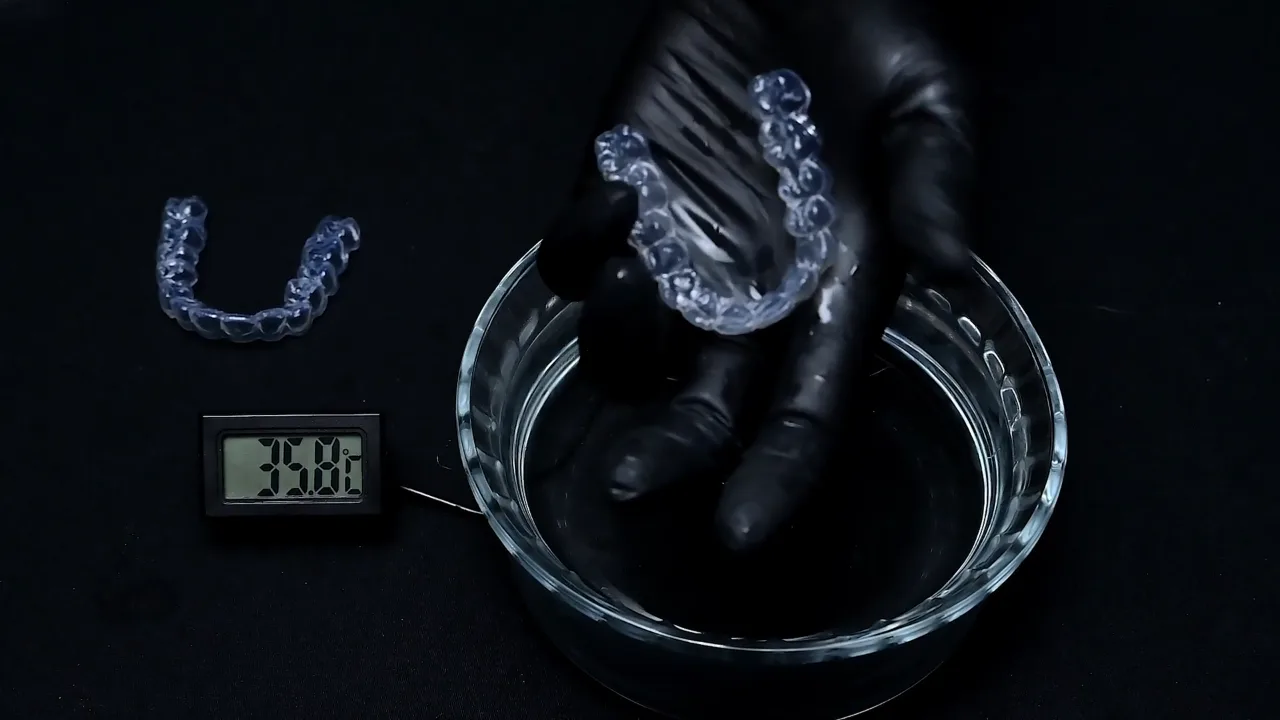
What does this technology mean in practice?
On reaching intraoral temperature, Thermemory Polymer® changes its behavior and two properties start working together:
Shape memory
The material tends to recover the geometry programmed digitally, even after deformations that occur during use.
Thermoresponsive flexibility
At intraoral temperature the material becomes more flexible, favoring the adaptation of the aligner to the dental structures and making it more comfortable to wear.
More flexible to adapt. Shape memory to recover its programmed geometry.
Activate the shape memory potential
Thermemory Polymer® responds to intraoral temperature during use. When needed, the thermal activation protocol makes it possible to intensify that response temporarily.
Immersing the aligner for a few seconds in water heated above 50 °C, following the official protocol, increases its flexibility and favors recovery of the programmed geometry.
- At installation Favors the initial adaptation of the aligner.
- During treatment Can be used as a supporting resource whenever aligner adaptation needs to improve.
Important: always follow the official Makertech Labs parameters and protocols.
Drag to simulate temperature
- Controlled stress relaxation
- Reorganization of polymer chains
- Improved adaptation to teeth and attachments
- Unmatched patient comfort
- Continuous recovery of shape memory
Freedom to produce. Autonomy to choose.
PriZma Bio Aligner was developed under the Open System concept, letting the professional integrate the technology into their own digital workflow using compatible equipment and approved protocols.
A proposal created to widen access to direct printing, without tying the professional to a single equipment ecosystem.
Equipment freedom
Compatible with different 3D printers approved for the PriZma protocol.
Post-processing workflow
The option to use equipment compatible with the protocol, fitting the workflow to the professional's own setup.
Production autonomy
More freedom to structure your own direct printing workflow, without depending on a single proprietary platform.
An open system does not mean the absence of a protocol. It means freedom inside a validated workflow.
Become a certified professional
Why is certification necessary?
PriZma Bio Aligner is a professional-use dental resin that uses an open production ecosystem and, above all, safeguards both the patient and the orthodontist.
Although the equipment is easy to acquire, the performance of the Bio Aligner system depends on the precise execution of the entire laboratory workflow, from orthodontic planning to printing, post-processing and aligner installation.
Certification ensures that each professional is prepared to use the technology with safety, predictability and scientific support.
In addition to the initial training, the orthodontist becomes part of an exclusive community with continuous access to new protocols, scientific evidence, technical support and updates to the technology used.
Certification benefits
Technology access
Official eligibility to purchase and use PriZma Bio Aligner.
PriZma certification
Recognition as a professional officially certified to use the technology.
Exclusive content
Access to PriZma Academy classes, protocols and technical materials.
Clinical application
Clinical cases, protocols and experiences to support adopting the technology into daily practice.
Continuous updates
Access to protocol developments and PriZma technology updates.
Specialized support
Technical guidance to support the professional throughout the direct printing workflow.
Ready to bring 3D printed aligners into your clinic?
Get certified to access PriZma Bio Aligner and join a constantly evolving ecosystem that connects technology, knowledge and specialized support.
Frequently asked questions
PriZma Bio Aligner is a technology for producing orthodontic aligners directly through 3D printing, developed for professionals who want to incorporate this workflow into the clinic or laboratory.
Its differentiation lies in the combination of direct printing, digital workflow and Thermemory Polymer® technology, allowing greater control of the production process within the appropriate protocol.
It is a thermoresponsive technology developed by Makertech Labs that promotes a thermal transition in contact with intraoral temperature, favoring adaptation, comfort and continuous recovery of shape memory.
Yes. The use of Bio Aligner depends on the correct execution of the clinical and laboratory workflow. Certification qualifies the professional to use the technology.
It is PriZma Bio Aligner's Open System concept: production uses 3D printers widely available on the market and cost-effective post-processing equipment, with no complex or proprietary structures. This makes direct printing of aligners more accessible to the orthodontist, always within the official protocols.
Compatibility must be confirmed according to the official protocols and equipment approved by Makertech Labs.
The Light and Hard versions were developed for different clinical needs and should be selected according to the planning and indicated protocol.
Yes, the material is presented as biocompatible within the product information and should be used according to the official protocols.
According to the product information, PriZma Bio Aligner can be disinfected and sterilized, according to the indicated protocol.
Post-processing must follow the official Makertech Labs protocol, including the steps necessary to ensure safety, predictability and aligner performance.
Certification grants access to recorded classes, updates, protocols and supplementary materials, according to Academy availability.
The certified professional will have access to specialized technical support through the official channels informed by Makertech Labs.